Where Industrial Robots Are Made: A 336-Robot Country Breakdown
China builds 38.1% of the 336 robots in our database, ahead of Japan's 35.1%, even though every Chinese robotics brand we track was founded after 1993.
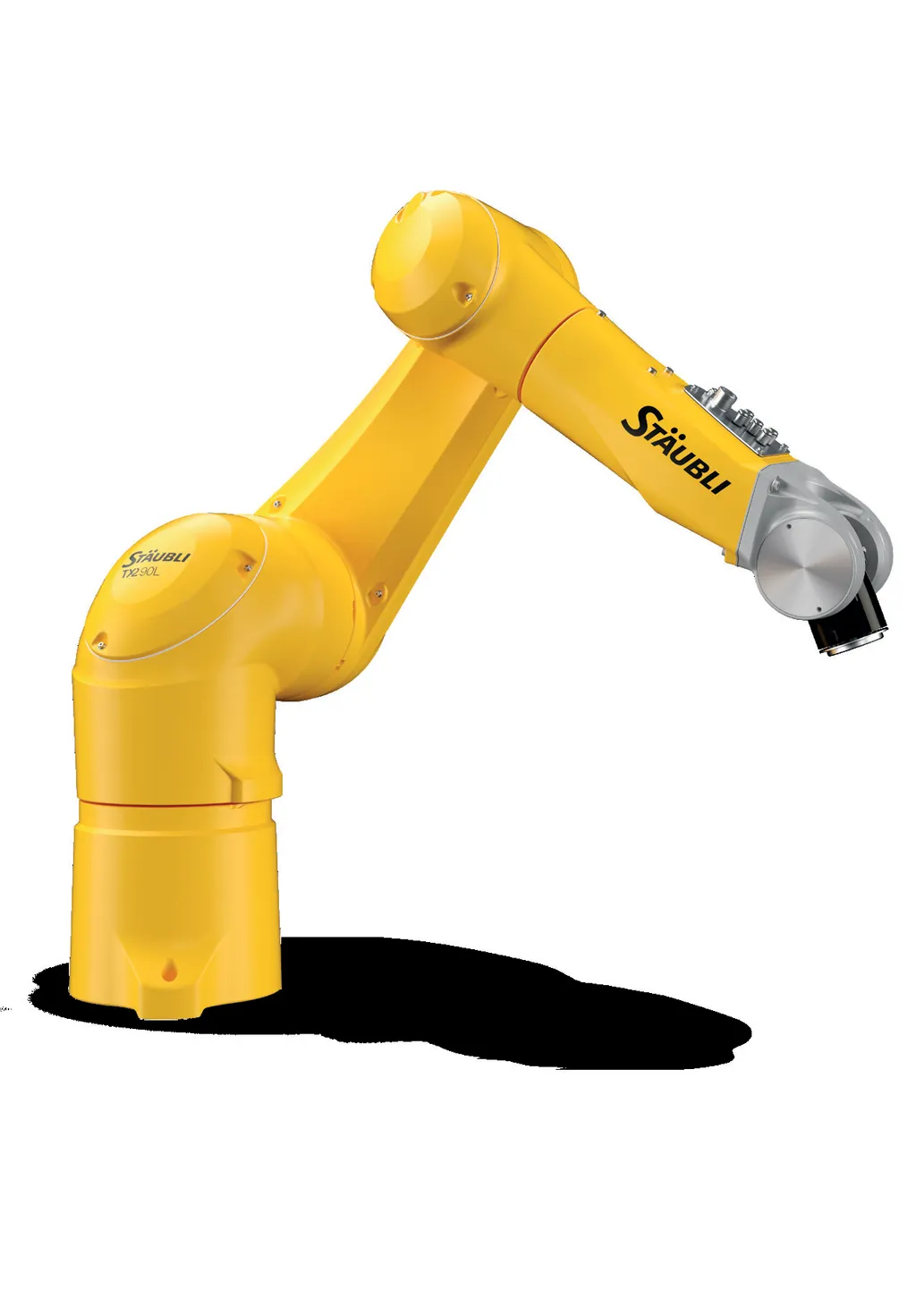
Updated 2026-09-17: this breakdown reflects our database as of July 2026. A larger, more recent recount puts Japan back ahead of China — see Where Robots Are Made: Japan Retakes the Lead From China for the current 425-robot figures.
China now builds more of the industrial robots in our database than any other single country, 128 of 336, 38.1%, edging out Japan’s 118, 35.1%. That alone isn’t the story. The story is the age gap underneath it: every Japanese, German, and Swiss brand we track was founded before 1990, the oldest in 1892. Every Chinese brand we track was founded between 1993 and 2017, a median company age of 11.5 years against a 93-year median for the legacy makers whose catalog share it’s now matching.
Which country makes the most industrial robots in our database?
Our analysis covers all 336 robots across the 20 brands in the Industrial Robotics Hub database, resolved to a country of origin for every single one, no gaps. Only 192 of those robots (57.1%) carry a country directly on the robot record itself; the rest resolve through the parent brand’s HQ country, which is populated on all 20 brands. Browse the full set at /brands/.
| Country | Robots | Share | Brands |
|---|---|---|---|
| China | 128 | 38.1% | AUBO, Dobot, Estun, Han’s Robot, Inovance, JAKA, ROKAE, Siasun |
| Japan | 118 | 35.1% | Epson, FANUC, Kawasaki, Mitsubishi Electric, OMRON, Yaskawa Motoman |
| Switzerland | 39 | 11.6% | ABB Robotics, Stäubli Robotics |
| Germany | 19 | 5.7% | KUKA |
| South Korea | 12 | 3.6% | Doosan Robotics |
| Taiwan | 11 | 3.3% | Techman Robot |
| Denmark | 9 | 2.7% | Universal Robots |
Source: our analysis of src/content/brands/*.json (country, HQ, founded) applied to all 336 robots in src/content/robots/*.json, 2026-07-19.
Stack every non-Chinese legacy maker together (Japan, Switzerland, Germany: 176 robots, 52.4%) and China is still the minority. But no single one of those countries beats it alone, and none of their brands is younger than 1969. China winning the single-country race is the finding worth sitting with.
How old are the companies behind these robots?
This is where the number gets strange. Sort all 20 brands by founding year and a hard line appears at 1990: nine brands founded before it (all Japanese, Swiss, or German), eight founded after it (all Chinese), and two founded in between (Universal Robots, Denmark, 2005, and a fresh wave starting with Estun, China, 1993).
| Founded | Brand | Country | Company age (2026) |
|---|---|---|---|
| 1892 | Stäubli Robotics | Switzerland | 134 years |
| 1898 | KUKA | Germany | 128 years |
| 1915 | Yaskawa Motoman | Japan | 111 years |
| 1921 | Mitsubishi Electric | Japan | 105 years |
| 1933 | OMRON Robotics | Japan | 93 years |
| 1969 | Kawasaki Robotics | Japan | 57 years |
| 1972 | FANUC | Japan | 54 years |
| 1982 | Epson Robots | Japan | 44 years |
| 1988 | ABB Robotics | Switzerland | 38 years |
| 1993 | Estun | China | 33 years |
| 2000 | Siasun | China | 26 years |
| 2003 | Inovance | China | 23 years |
| 2005 | Universal Robots | Denmark | 21 years |
| 2014 | JAKA | China | 12 years |
| 2015 | AUBO | China | 11 years |
| 2015 | Dobot | China | 11 years |
| 2015 | Doosan Robotics | South Korea | 11 years |
| 2015 | ROKAE | China | 11 years |
| 2016 | Techman Robot | Taiwan | 10 years |
| 2017 | Han’s Robot | China | 9 years |
Source: founded field, src/content/brands/*.json, all 20 brands, 100% populated.
Blue = the nine pre-1990 legacy brands (all Japanese, Swiss, or German). Teal = the eight Chinese brands, all founded 1993 or later. Green = the two non-Chinese “young” brands: Universal Robots and Doosan.
Does a 134-year head start still show up in the catalog?
Not in market share. Stäubli built its first machine tool in 1892, sixty years before the transistor. KUKA welded its first robot arm onto a production line in 1973, having existed as a company since 1898. Yaskawa (1915), Mitsubishi Electric (1921), and OMRON (1933) all predate industrial robotics as a category by decades. Compare that to Han’s Robot, founded 2017, whose entire nine-year existence sits inside the time it took Stäubli to go from its 100th to its 110th birthday.
Age hasn’t bought the legacy brands a durable catalog-share lead. China’s eight brands, with a combined company age you could round to “younger than the newest KUKA controller generation,” now outnumber Japan’s six brands 128 robots to 118. That’s not a hardware-quality claim, our Chinese robots buyer reality check covers the service-network and parts-lead-time gaps that still separate the two groups. It’s a catalog-breadth claim: measured by how many models a brand has shipped into a spec database like this one, the newest entrants have caught the oldest incumbents in nine to twenty years.
Universal Robots (Denmark, founded 2005, 21 years old) and Doosan Robotics (South Korea, founded 2015, 11 years old) are the reminder that this isn’t purely a China-versus-everyone-else story. Both are non-Chinese brands that built meaningful catalog presence, 9 and 12 robots respectively, without a 20th-century head start. The real dividing line isn’t nationality, it’s whether a brand entered the market before or after the cobot boom of the mid-2010s made building an industrial robot company cheaper and faster than it was in 1988, let alone 1892.
What this means for a buyer comparing brands
Company age tells you almost nothing about a robot’s spec sheet, and this dataset proves it: the newest brand in our database (Han’s Robot, 9 years old) publishes cobots with repeatability figures that sit inside the same range as Stäubli’s, a company 125 years its senior. What company age still predicts reasonably well is depth of service infrastructure, established integration partnerships, and parts-supply maturity, the things a spec JSON can’t capture. If you’re weighing a Chinese cobot against a Japanese or European one on hardware numbers alone, check our controller platform breakdown by brand and which robots are easiest to program by brand before you decide, those two data cuts show where the real operational differences still sit, regardless of how young or old the badge on the arm is.
The oldest brand we track is Stäubli, founded 1892 in Switzerland. The youngest is Han’s Robot, founded 2017 in Shenzhen. Both sell industrial robots today. Only one of them existed before the light bulb was standard equipment in a factory.
Compare these robots