FCC Adds Foreign-Made Mobile Robots to Its Covered List
A July 28 FCC notice bars new foreign-made AMRs, quadrupeds and humanoids from US authorization — the first time mobile robots hit this security list.

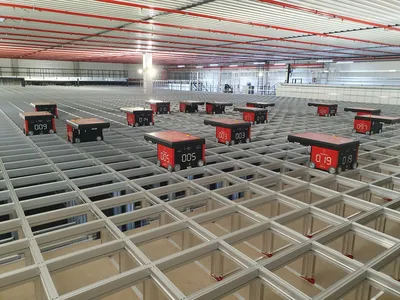
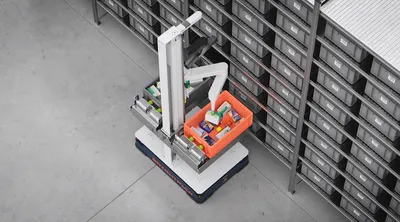
On July 28, the FCC’s Public Safety and Homeland Security Bureau added “foreign-produced advanced robotic devices” to its Covered List — the same national-security mechanism that has already blocked Huawei and ZTE telecom gear, Hikvision and Dahua surveillance cameras, and Chinese-made consumer routers. It’s the first time mobile robots have landed on that list. The practical effect: any new foreign-made autonomous mobile robot (AMR), inspection quadruped, or humanoid generally cannot receive the FCC equipment authorization required to be imported, marketed, or sold in the US, unless its maker secures a specific exemption from the Department of War. The notice, DA 26-786, is eleven days old as of this writing — not breaking news, but a live compliance question that just landed on the desk of anyone buying foreign-made mobile robots for a US facility.
What the FCC did, and how
Public Notice DA 26-786 follows a fixed legal path under the Secure and Trusted Communications Networks Act of 2019: the FCC cannot add anything to its Covered List on its own initiative, only after a White House-convened Executive Branch interagency body sends it a formal National Security Determination. On July 27, that body sent two — one for foreign-produced power inverters (the electronics linking solar panels and battery storage to the US grid), one for foreign-produced advanced robotic devices. The FCC accepted both, effective July 28.
Mechanically, this runs through the FCC’s existing equipment-authorization rules: once something is “covered equipment,” it’s barred from receiving new authorizations (47 CFR § 2.903(a)), and every application must certify the device isn’t covered (47 CFR § 2.911(d)(5)(i)). It isn’t retroactive — the FCC isn’t revoking existing certifications, just shutting the door on new ones. Chairman Brendan Carr called it continuity with the Commission’s existing pattern: “Following President Trump’s leadership, the FCC will continue to do our part to secure America’s critical supply chains and, with today’s action, the FCC is acting in lock step with our national security agencies to do just that.” The pattern he’s referencing runs back five years: Huawei/ZTE and Hikvision/Dahua/Hytera gear (March 2021), Kaspersky software (2022, 2024), Chinese drone components (December 2025), and foreign-made consumer routers (March 2026) all preceded this entry.
What actually counts as an “advanced robotic device”
Appendix C’s definition determines exactly what’s affected. A device is covered if it’s a mechanical mobile device — explicitly including AMRs, humanoid robots, and quadrupeds — that can move or navigate on the ground; operates at a distance from a human operator based on commands or sensor data; weighs, with any docking station, over 4.4 lbs; and carries all three of a perception sensor, network connectivity (wired or wireless, at least 200 kbps), and software — including firmware or AI/ML model weights — controlling its autonomous navigation, data collection, or remote command-and-control.
What’s carved out matters just as much. Excluded: connected vehicles of any weight, rail-only vehicles, drones (already separately covered), underwater vehicles, and FDA-regulated medical devices. Most relevant to this site’s own catalog, the exclusion list names, verbatim, “a fixed, stationary, non-mobile robot, including articulating, parallel/delta, Cartesian/gantry, or Selective Compliance Assembly, or Articulated Robot Arm (SCARA) robots intended for industrial or medical use.” The six-axis arm, delta, SCARA, and gantry catalog that dominates industrial robotics sits entirely outside this rule — it targets wheeled and legged mobile robots specifically. “Foreign-produced” is defined via the federal Buy American Standard’s “domestic end product” test (48 CFR § 25.101(a)): it’s about where a device is built, not the nationality of the company selling it.
The stated rationale
The determination cites two risks: a “supply chain vulnerability that could disrupt U.S. economic and national security,” and a “cybersecurity risk that threatens the security of critical infrastructure.” Its supporting evidence includes a February 2026 Guardian report on a researcher who remotely accessed roughly 7,000 consumer robots worldwide through one vulnerability; an IEEE Spectrum piece by Evan Ackerman, “Exploit Allows for Takeover of Fleets of Unitree Robots” (September 2025) — the FCC’s own cited evidence, naming Unitree specifically; and an April 2025 Axios report on a suspected pre-installed backdoor in foreign-made quadrupeds. The determination separately frames advanced robotic devices as used for “providing physical security at sensitive locations, enabling industrial inspections in environments dangerous to humans” — a direct acknowledgment that industrial inspection, not just consumer or battlefield use, is a core affected application.
What it doesn’t do, and the buyer’s angle
The FCC’s fact sheet is explicit: this doesn’t affect any device already purchased or already authorized, doesn’t touch federal purchase or use at all, and isn’t an outright foreign-manufacturer ban — a Conditional Approval from the Department of War (applications to conditional-approvals@fcc.gov) lets a specific model or product class keep receiving authorization despite being foreign-built.
For anyone specifying AMR fleets or inspection robots, the practical question shifts from “is this robot good” to “is this model already authorized, or has its maker filed for Conditional Approval.” A Unitree quadruped already on the market is unaffected; a new Unitree model seeking authorization for the first time is squarely in this rule’s path. That distinction matters for a site that covered an Avnet/Weston Robot inspection platform built on a Unitree quadruped just two days before this notice — any future new model in that line now faces a regulatory gate its predecessor didn’t.
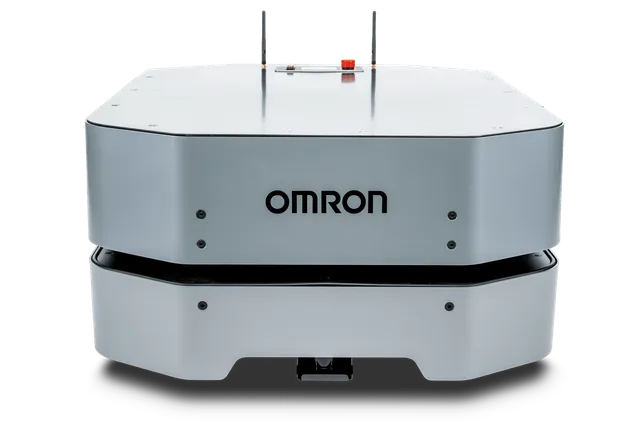
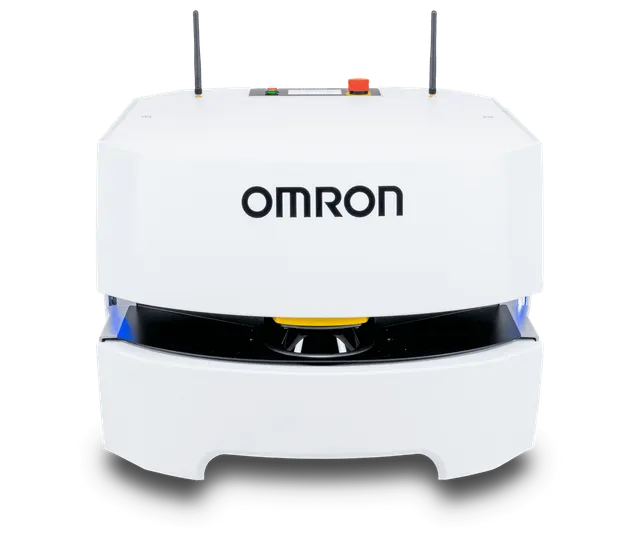
Every one of the seven robots tagged “mobile” in Industrial Robotics Hub’s own database — the Omron LD-250, LD-90, and five siblings — is an OMRON AMR. That’s not a nationality exemption; the carve-out is about already holding FCC authorization, not about where a robot is made. It illustrates who this rule squeezes: not incumbents with years of authorized product on the market, but newer, lower-cost foreign AMR, quadruped, and humanoid entrants seeking a first authorization now. Most of the fixed-arm catalog this site otherwise covers — tracked here by country of manufacture — sits outside the rule’s scope for a separate reason: it only reaches mobile devices.
Sources
- FCC's Public Safety and Homeland Security Bureau Announces Addition of Foreign-Produced Power Inverters and Advanced Robotic Devices to FCC Covered List (DA 26-786) — Federal Communications Commission, Jul 28, 2026
- FACT SHEET: FCC Updates Covered List to Include Foreign-Produced Advanced Robotic Devices and Power Inverters — Federal Communications Commission, Jul 28, 2026
- FCC Covered List Bans New Foreign Mobile Robots in US — IEEE Spectrum, Jul 28, 2026
- United States Bans Chinese Humanoid And Quadruped Robots, Citing National Security — Forbes, Jul 28, 2026
Robots mentioned
Tap a card to open the full spec sheet.
Frequently asked questions
Does this affect robots my company already owns or has already purchased? +
No. The FCC's own fact sheet states plainly that the update "does not impact a consumer's continued use of devices they previously acquired" and does not prevent retailers from continuing to sell, import, or market models the FCC already authorized. The restriction only applies going forward, to new equipment-authorization applications for device models not yet approved.
Does this affect fixed industrial arms — the ABB, FANUC, KUKA, Yaskawa and similar robots this site's own database mostly covers? +
No. The underlying National Security Determination explicitly excludes "a fixed, stationary, non-mobile robot, including articulating, parallel/delta, Cartesian/gantry, or Selective Compliance Assembly, or Articulated Robot Arm (SCARA) robots intended for industrial or medical use." The rule targets wheeled, tracked and legged mobile robots only.
What robots are actually covered? +
Any foreign-produced mechanical mobile device — including autonomous mobile robots (AMRs), humanoid robots and quadrupeds — that can move or navigate on the ground at a distance from a human operator, weighs (with any docking station) over 4.4 lbs, and carries all three of: an environment-sensing sensor, wired or wireless network connectivity of at least 200 kbps, and software (including firmware or AI/ML model weights) controlling its autonomous navigation, data collection, or remote command-and-control. Connected vehicles, rail vehicles, drones, underwater vehicles and FDA-regulated medical/mobility devices are separately excluded.
Can a foreign manufacturer still sell new mobile robots in the US at all? +
Yes, through a Conditional Approval. Producers can submit their device or device class to the Department of War (conditional-approvals@fcc.gov) for evaluation; if DoW determines it doesn't pose the risks described in the determination, that model can keep receiving FCC equipment authorization despite being foreign-produced.
More news