Humanoid Capital Chases Proof, Not Specs, as Data Becomes the Moat
Three China humanoid raises target IPO or deployment proof, while NEURA, Generalist AI and Kawasaki treat data and integration as the real bottleneck.
Three Chinese and Toyota-linked humanoid makers raised or cleared a combined $1.1 billion-plus this week, and every one led with proof rather than a spec sheet: an audited profit, a production floor, a livestream. Underneath that capital story, a quieter pattern ran through NEURA Robotics, Generalist AI and Kawasaki’s announcements: the binding constraint on physical AI right now is data and integration, not model intelligence, and companies are building gyms, co-designed arms and simulation tooling to own that bottleneck. A third thread cuts across both: separating audited numbers from company-reported ones, and that gap is widening as fast as the funding rounds.
Capital now chases execution proof, not specs
China’s securities regulator cleared Unitree Robotics for a roughly $618 million STAR Market IPO on July 3, though as of late July the listing had not priced or debuted. What makes Unitree unusual is that the underlying business is real: 2025 revenue of about 1.69-1.7 billion yuan and roughly 591 million yuan in adjusted profit, against competitor UBTech’s comparable roughly 2 billion yuan revenue and a 700 million yuan net loss the same year. That is a rare thing in humanoid robotics: an actual, audited-for-listing profit rather than a growth-stage burn rate.
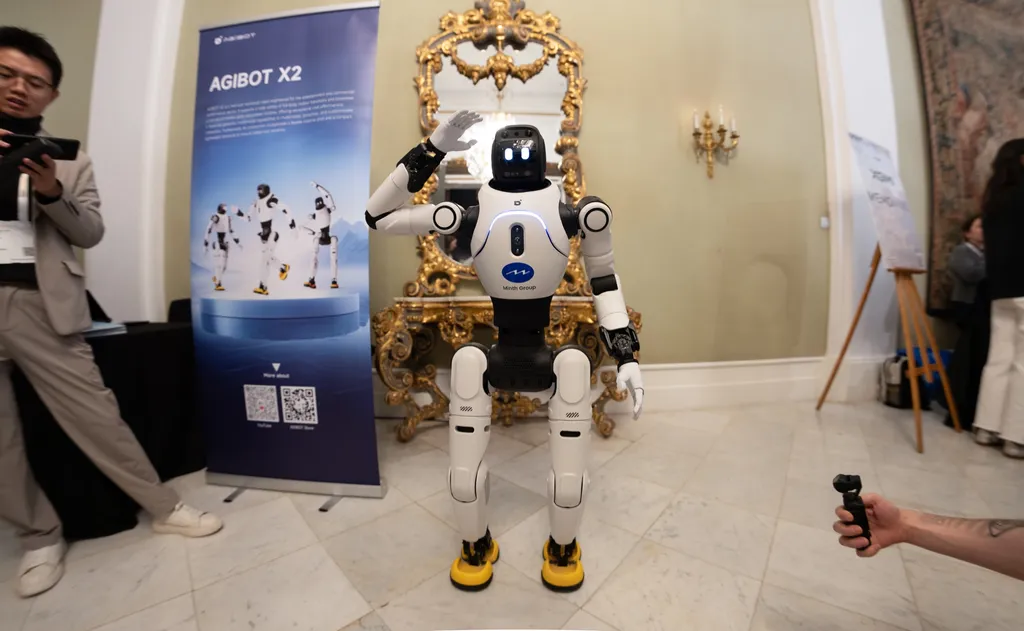
Unitree wasn’t alone. LimX Dynamics closed a $200 million pre-IPO round on July 14 at roughly $2.2 billion, its second $200 million-scale raise in six months, putting close to $400 million into the company across two quarters and positioning explicitly for its own future listing. Walden Robotics, a Toyota Research Institute spinout led by MIT’s Russ Tedrake, emerged from stealth on July 15 with $300 million at a $1.1 billion valuation, backed by Toyota alongside Nvidia, Boeing, Samsung Ventures and CoreWeave. The money is notable; the underlying claim is more interesting: Walden says its robots have done real production work, loading and unloading car parts, kitting for assembly, at a Toyota plant in North America since February 2026, moving from pilot to production in under two months. Tedrake’s framing, that “providing real value to customers… requires deep understanding of how manufacturing is done today,” echoes the argument AGIBOT made at WAIC 2026 the same week, where the company paired four product launches with a claimed 3,000-units-per-shift tablet-inspection deployment at Longcheer Technology’s Nanchang facility, sub-4% downtime and a 99.99% task-success rate, plus a six-day public livestream. AGIBOT says it shipped its 15,000th unit in June 2026 and, per an Omdia estimate cited by outside coverage, holds roughly 39% of global humanoid supply.
None of that is proof humanoid robots work broadly at production scale. It is proof that a specific set of investors, Chinese state and financial capital plus Toyota’s own strategic arm, now wants a named customer and operating data attached to a check, not just a spec sheet and a demo stage.
Integration, not the arm itself, is the new competitive layer
Two stories this week, on their face unrelated, said the same thing about where value is shifting in robotics deployment. Kawasaki and Dexterity’s expanded collaboration around the RL030N, an 8-degree-of-freedom warehouse arm, reversed the usual integration sequence: instead of a systems integrator picking an off-the-shelf 6-axis arm and building tooling around it, Dexterity’s warehouse-logistics requirements shaped the arm’s kinematics before Kawasaki finalized the design, and it runs on Kawasaki’s open KRNX API specifically so Dexterity’s Foresight World Model can drive it dynamically rather than replay a fixed program. Neither company has published cycle times, pick-success rates or deployment counts, so the performance case remains unproven, but the engineering model, hardware built to the AI software’s spec, is the real story.
Eclipse Automation’s news landed in a different register, same theme. The 25-year-old Cambridge, Ontario systems integrator is getting $6 million CAD from FedDev Ontario, part of a nearly $40.5 million regional package, to build a Neuron Centre housing a Digital Manufacturing Incubator and an immersive-technology lab, and to accelerate Project Neuron, its internal workflow initiative. The product tying it together is Eclipse RealitySync, pairing Gaussian splatting with Apple Vision Pro so manufacturers can walk a proposed factory layout before it’s built, so far a trade-show demo with no named customer case study. A government putting tariff-response and regional-defence money into an integrator’s simulation tooling, rather than a robot maker’s hardware, is a data point on where planners think the deployment bottleneck actually sits.
The data-scarcity arms race is buying gyms, not just GPUs
NEURA Robotics made the underlying thesis explicit. Announcing a 3,000-square-meter “Gym” with RWTH Aachen on July 22, CEO David Reger said plainly: “The biggest bottleneck in Physical AI is no longer intelligence, it’s experience.” The facility, backed by a Series C the company describes as up to $1.4 billion, is one of ten Gyms NEURA says are under development globally, with five claimed operational by year-end. Only two, Aachen and a TUM Munich site planned for Q4 2026, are actually named.
Generalist AI’s approach looks different on paper but rhymes: GEN-1 is pretrained on more than 500,000 hours of human wearable-device interaction data, not robot data, then fine-tuned with roughly one hour of robot demonstration per task. Elite Robots’ July 21 validation announcement ran 1,800-plus zero-intervention block-stacking cycles and 200-plus box-folding cycles on Elite’s own cobot hardware, a genuine new contribution. But the marquee 99% success rate and 3x speed figures trace back to Generalist’s own April blog post, not new July results, and Generalist AI has not itself named Elite Robots as a partner in its public materials, a gap independent coverage from Unite.AI flagged directly. Different companies, same bet: whoever controls the pipeline of real-world interaction data, wearable sensors, dedicated gyms, cobot test rigs, owns the actual constraint on physical AI.
Reading the evidence tier matters more than the headline number
Put side by side, this week’s stories sit on very different rungs of a credibility ladder. Unitree’s profit figures are audited for a public listing. Walden’s Toyota deployment is a named customer at a named plant, verifiable in principle even if not yet independently audited. AGIBOT’s Longcheer numbers add a public livestream above a bare claim, still unaudited. NEURA’s Gym count and Generalist AI’s headline stats sit lower still: company-stated figures, in Generalist’s case recycled from a months-old post and re-presented alongside hardware-reliability specs (100,000-hour MTBF, ±0.02mm repeatability) that describe the cobot arm, not the AI model’s accuracy. None of that makes the underlying stories worthless; it means readers should ask, before the number, what tier of evidence is actually behind it.
Sources
- AGIBOT Debuts Four Robots at WAIC, Points to a Factory Deployment as Proof — Industrial Robotics Hub, Jul 21, 2026
- Unitree Clears $618M STAR Market IPO as China's Humanoid Funding Race Accelerates — Industrial Robotics Hub, Jul 21, 2026
- Kawasaki's RL030N 8-DoF Arm Powers Dexterity's Physical-AI Warehouse Push — Industrial Robotics Hub, Jul 24, 2026
- Eclipse Automation Gets $6M Federal Grant for Digital Mfg Hub — Industrial Robotics Hub, Jul 25, 2026
- NEURA Robotics Opens 3,000m² Physical AI Gym With RWTH Aachen — Industrial Robotics Hub, Jul 25, 2026
- Elite Robots Backs Generalist AI's GEN-1 With Cobot Validation — Industrial Robotics Hub, Jul 25, 2026
- Unitree Robotics Wins Approval for $618 Million STAR Market IPO — Caixin Global, Jul 3, 2026
- Chinese Robotics Startup Raises $200 Million — Caixin Global, Jul 14, 2026
- From Toyota lab to $1.1B unicorn in 6 months: Walden Robotics raises $300M seed — Tech Funding News, Jul 15, 2026
- New NEURA Gym with RWTH Aachen: NEURA Robotics Expands its Global Training Network for Physical AI — NEURA Robotics (official), Jul 22, 2026
- Kawasaki Robotics and Dexterity Expand Collaboration to Scale Physical AI for Warehouse Logistics — Kawasaki Robotics, Jun 23, 2026
- Elite Robots Pitches Its Cobots for Generalist AI's GEN-1 — Unite.AI, Jul 21, 2026
- Eclipse Automation Receives $6 Million Investment to Bring Digital Innovation to Factory Automation — GlobeNewswire (Eclipse Automation Inc.), Jul 24, 2026
Robots mentioned
Tap a card to open the full spec sheet.
Frequently asked questions
Is Unitree's IPO actually listed yet? +
No. China's securities regulator (CSRC) approved the $618 million STAR Market IPO on July 3, 2026, but as of late July it had not priced or debuted.
Did AGIBOT's Longcheer deployment numbers get independently verified? +
No. The 3,000 units-per-shift, sub-4% downtime and 99.99% task-success figures are AGIBOT's own claims; a six-day public livestream added an evidence layer, but no third-party audit confirmed them.
What does NEURA's $1.4 billion Series C have to do with the Gym announcement? +
The Series C, described as up to $1.4 billion, was announced in June 2026; the July 22 RWTH Aachen Gym is that capital being deployed into training infrastructure. NEURA claims ten Gyms are under development, but only two, Aachen and TUM Munich, are actually named.
Why does a Canadian systems integrator matter to humanoid robotics news? +
Eclipse Automation's $6 million CAD FedDev Ontario grant funds digital-twin and simulation tooling, Gaussian splatting paired with Apple Vision Pro, not hardware, showing capital is also flowing to the integration layer that makes deployments faster and lower-risk, not just headline robots.
More news