July 2026: Humanoids Hit Inflection — $6B Sovereign, $2B Capital
Japan's trillion-yen Noetra bet, a US SPAC debut, and China's IPO wave mark humanoid robotics' July shift from moonshot to funded infrastructure.
July 2026 was the month humanoid robotics stopped being a demo-stage story and became a capital-markets and industrial-policy story. Roughly $2 billion in disclosed private and public-listing capital moved into humanoid makers, Japan’s government committed $2.4 billion for fiscal 2026 alone inside a five-year, $6.1 billion program, and Agility Robotics and Unitree both took concrete steps toward public markets without finishing the trip. Underneath the funding headlines ran a quieter theme: buyers pushing past specs toward operating data, fleet-orchestration software, and single-camera navigation that trades sensor cost for model capability.
Japan’s $6.1B sovereign bet on physical-AI infrastructure
Japan’s Ministry of Economy, Trade and Industry committed up to ¥1 trillion ($6.1 billion) over five years to the SoftBank-, Sony-, NEC- and Honda-backed Noetra consortium, with a ¥387.3 billion ($2.4 billion) tranche guaranteed for fiscal 2026 and the rest conditional on stage-gate milestones. The target: 10 million AI robots deployed across 18 sectors by 2040 and more than 30% of the global physical-AI market. Noetra’s core deliverable is a multimodal foundation model, co-developed with Japan’s AIST research institute, that robot makers can build products on rather than each training their own model from scratch.
Two days later, FANUC, Yaskawa, Kawasaki Heavy Industries and Fujitsu committed to NVIDIA’s Cosmos physical-AI stack as the compute layer underneath that model: a 27,500-Rubin-GPU, 13,750-Vera-CPU order and a 140-megawatt data center operated by Noetra Corp. It is a slow-moving, infrastructure-not-product bet, construction doesn’t start until April 2027 and the data center isn’t targeted to run until June 2028. Japan isn’t backing one robot design against Optimus or Digit; it’s funding the shared model and compute layer four of its largest robot and electronics makers plan to build separate products on.
China’s humanoid capital wave clusters around execution proof
China’s securities regulator approved Unitree Robotics for a roughly $618 million STAR Market IPO on July 3, notable mainly because Unitree is a rare profitable humanoid maker: about 1.69-1.7 billion yuan in 2025 revenue and roughly 591 million yuan in adjusted profit, against competitor UBTech’s comparable 2 billion yuan revenue and a 700 million yuan net loss. Unitree had not priced or debuted as of this writing; unconfirmed reporting of a specific August listing date and a mid-2026 revenue-growth slowdown could not be independently verified in time and is omitted here.
Unitree wasn’t the only nine-figure China raise. AI² Robotics closed roughly $735 million at a $2.8 billion valuation for AlphaBot, a wheeled rather than bipedal humanoid, backed by state, corporate and financial capital. LimX Dynamics closed a $200 million pre-IPO round at roughly $2.2 billion, its second nine-figure raise in six months, and Walden Robotics, a Toyota Research Institute spinout, emerged from stealth with $300 million at a $1.1 billion valuation, saying its robots have done production kitting and parts-handling work at a Toyota plant in North America since February 2026. The pattern differs from Japan’s infrastructure play: China’s capital chases individual companies with a named customer, an audited number, or a listing date attached, not a shared platform bet.
Agility Robotics takes the SPAC route to public markets
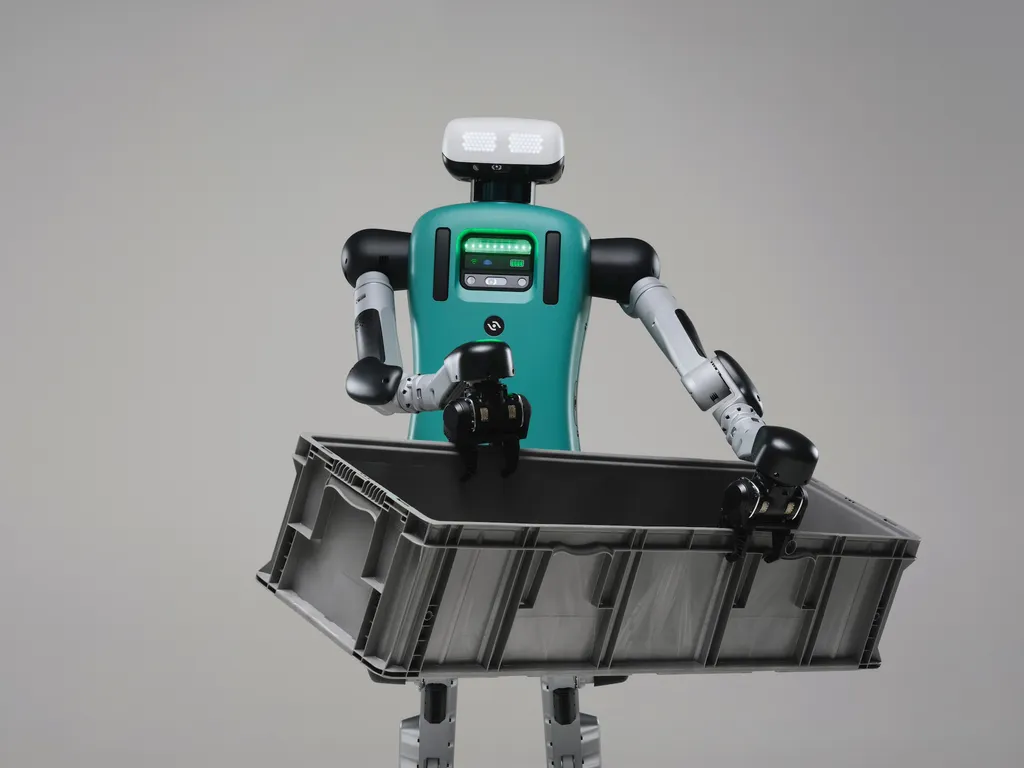
Agility Robotics agreed to merge with the SPAC Churchill Capital Corp XI at a $2.5 billion pre-money valuation, expecting more than $620 million in gross proceeds including a roughly $200 million Foxconn-led PIPE round. The deal, targeting a listing under ticker AGLT, had not closed as of August 1 and remains subject to shareholder approval and regulatory review. Agility’s pitch leans on Digit’s operating record rather than the raise: more than 65,000 logged operating hours across nine customer sites, including Schaeffler, GXO and Toyota, and over $300 million in multi-year orders, a company figure not independently audited. It is the first pure-play humanoid listing aimed at a North American exchange, arriving days after AI²’s raise and setting up a direct US-versus-China contrast in how humanoid makers reach public capital.
AGIBOT’s factory-floor scale claim
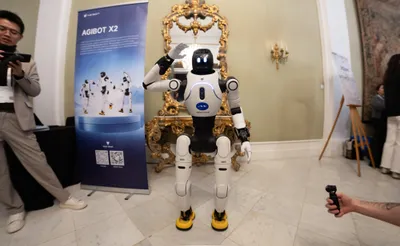
AGIBOT used its WAIC 2026 booth to launch four products, the A3 Ultra, X2 Edu, G2 Max and OmniHand 3 Ultra-M, but leaned harder on a real deployment than any spec sheet: G2 humanoids running tablet quality-inspection loading and unloading at Longcheer Technology’s Nanchang facility, roughly 3,000 units per shift, over 64 hours of continuous operation, sub-4% downtime, and a claimed 99.99% task-success rate, all AGIBOT’s own figures, not independently audited. The one externally sourced number is Omdia’s estimate that AGIBOT holds roughly 39% of global humanoid supply, alongside the company’s claim of a 15,000th unit shipped by June 2026. Read against Walden’s Toyota deployment, AGIBOT’s claim marks where the category’s credibility fight has moved: from demo footage to shift-level production data, even self-reported.
Teradyne Robotics logs a fifth straight growth quarter
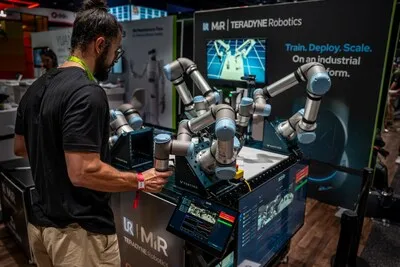
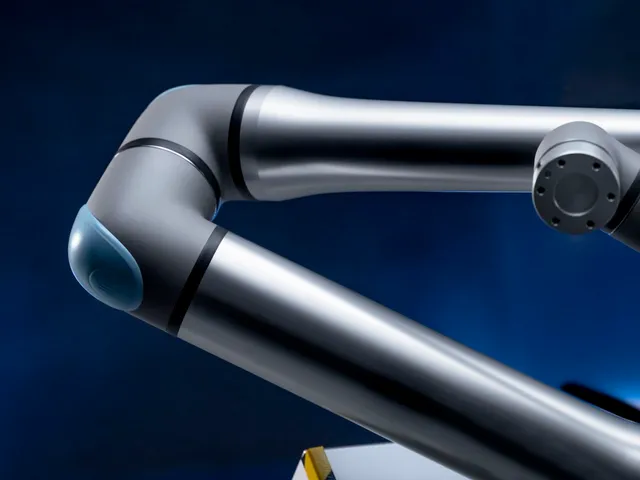
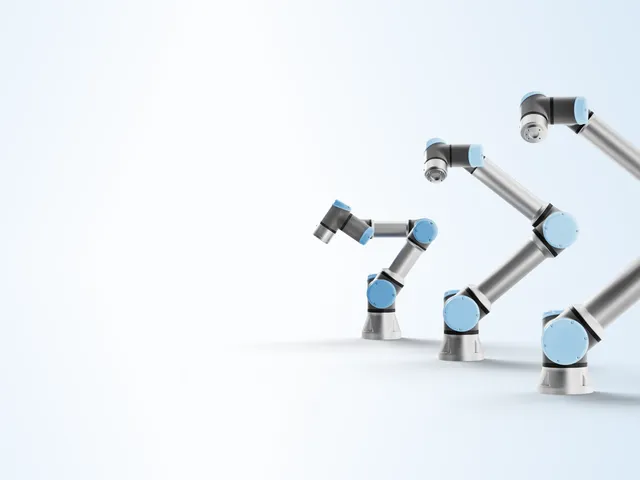
Away from humanoids, Teradyne’s Robotics segment, Universal Robots’ cobots plus MiR’s AMRs, posted $100 million in Q2 2026 revenue, up 33% year-over-year from $75 million in Q2 2025 and up from $91 million in Q1 2026, a fifth consecutive growth quarter after a segment that spent 2023 and 2024 shrinking. Robotics remains small next to Teradyne overall, about 7.5% of the company’s $1,329 million total Q2 revenue, running on AI-chip test demand; Teradyne publishes no segment-level guidance or robotics margin, so this recap attaches no forward number the original earnings story deliberately left unguided. The takeaway: established cobot and AMR demand is compounding steadily, a slower but more load-bearing signal than any single funding round.
AMR fleets shift from single-model autonomy to orchestration
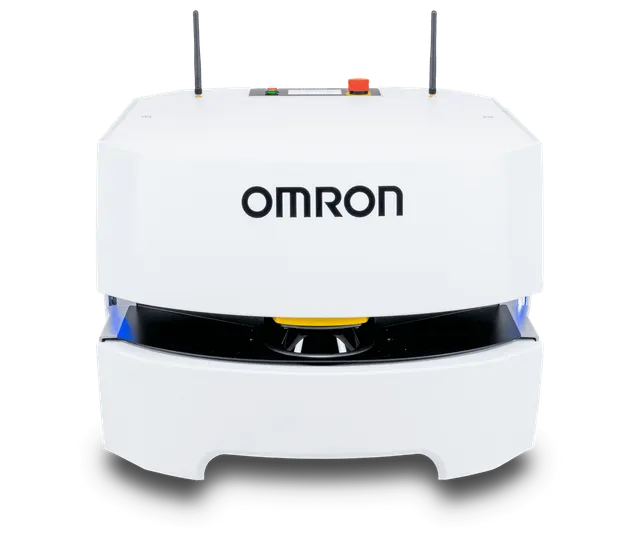
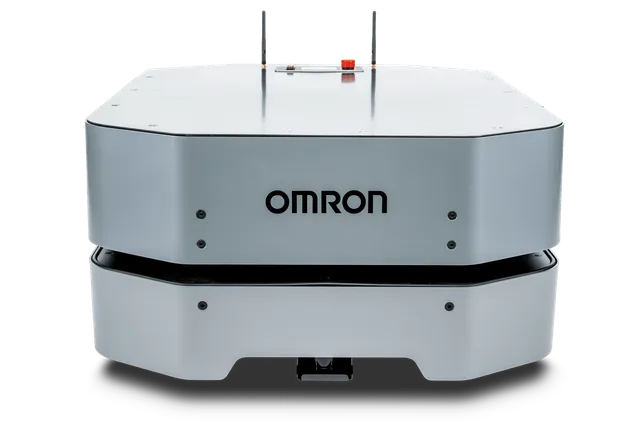
Two July launches point at the same maturation in mobile-robot software. ABB’s Flexley Stack F712 autonomous forklift, rated for 2,000 kg loads at ±10 mm accuracy per ABB’s specs, completes a visual-SLAM AMR line spanning Tug, Mover and Stack, coordinated through ABB’s AMR Studio. OMRON’s LD-150 and LD-300, expanding payload to 150 kg on a 500 mm chassis and 300 kg on a 580 mm chassis, add 30-minute wireless charging, ISO 3691-4:2023 compliance, and FLOW Core mixed-fleet orchestration ahead of Q4 2026. Neither launch is a leap alone; together they mark AMR vendors treating fleet-coordination software, not any one robot’s autonomy stack, as the differentiator now.
Robostral Navigate: software substituting for sensor hardware
Mistral AI’s Robostral Navigate, an 8-billion-parameter navigation model, reported a 76.6% success rate on the unseen-environment R2R-CE benchmark using a single ordinary RGB camera, no LiDAR, no depth sensor, beating the best single-camera baseline by 9.7 points and the best multi-sensor approach by 4.5 points, on Mistral’s own reported benchmarks, not independently reproduced. Trained in simulation on roughly 2.4 million trajectories across 350,000 scenes and refined with reinforcement learning, the model targets manufacturing, delivery, logistics and hospitality navigation. If the result holds outside Mistral’s own testing, it’s a real cost signal: software substituting for depth-sensor and LiDAR spend in mobile-robot bills of materials.
July’s disclosed capital splits into categories that shouldn’t be read as equivalent: Japan’s $2.4 billion is a guaranteed first-year government infrastructure tranche inside a five-year, $6.1 billion program; Agility’s $620 million-plus and Unitree’s $618 million are proceeds from public-listing transactions still pending or unpriced; AI²’s $735 million, LimX’s $200 million and Walden’s $300 million are private rounds already closed. A sovereign compute commitment isn’t the same instrument as a venture raise, and one bar chart would flatten that distinction, so this recap presents them in prose instead.
What to watch in August 2026: whether Agility’s SPAC merger with Churchill Capital Corp XI closes and AGLT starts trading; whether Unitree prices and debuts on the STAR Market, and at what valuation relative to its approved offering; whether Noetra Corp or its member companies disclose any milestone tied to the v1 foundation model due by the end of Japan’s fiscal 2026; and whether AGIBOT or Walden Robotics publish any third-party-verified performance data rather than company-reported figures. None of those are resolved yet; all four would change how this month’s numbers read in hindsight.
Sources
- Japan Launches $6B Noetra Consortium to Deploy 10M Robots by 2040 — Industrial Robotics Hub, Jul 15, 2026
- FANUC, Yaskawa, Kawasaki, Fujitsu Join NVIDIA Cosmos Coalition — Industrial Robotics Hub, Jul 17, 2026
- Unitree Clears $618M STAR Market IPO as China's Humanoid Funding Race Accelerates — Industrial Robotics Hub, Jul 21, 2026
- AI² Robotics Raises $735M for Wheeled Humanoid — Industrial Robotics Hub, Jul 13, 2026
- Agility Robotics to Go Public in $2.5B SPAC Deal — Industrial Robotics Hub, Jul 13, 2026
- AGIBOT Debuts Four Robots at WAIC, Points to a Factory Deployment as Proof — Industrial Robotics Hub, Jul 21, 2026
- Teradyne Robotics Posts 5th Straight Growth Quarter, Up 33% — Industrial Robotics Hub, Jul 31, 2026
- ABB's Flexley Stack F712 Completes Its vSLAM AMR Line — Industrial Robotics Hub, Jul 11, 2026
- OMRON Expands LD Series AMRs: 150kg and 300kg Payloads for Q4 2026 — Industrial Robotics Hub, Jul 17, 2026
- Mistral's Robostral Navigate Guides Robots With a Single Camera — Industrial Robotics Hub, Jul 14, 2026
Robots mentioned
Tap a card to open the full spec sheet.
Frequently asked questions
Did Agility Robotics' SPAC deal close in July? +
No. The merger with Churchill Capital Corp XI was announced and remains pending, expected to close later in 2026 subject to shareholder approval and regulatory review; it had not closed as of August 1.
Why did China's humanoid IPO activity accelerate this month? +
China's securities regulator approved Unitree Robotics' STAR Market listing on July 3, opening public-market access for a rare profitable humanoid maker, alongside AI² Robotics' state-backed raise and LimX Dynamics' pre-IPO round the same month.
What makes Japan's Noetra program different from private robotics funding elsewhere? +
Noetra is government-backed infrastructure, a shared foundation model and compute, not one company's product bet. FANUC, Yaskawa, Kawasaki and Fujitsu are each building separate commercial products on top of it.
Is AGIBOT's Longcheer factory deployment independently verified? +
No. The uptime and task-success figures are AGIBOT's own reported numbers. The one externally sourced data point in that story is Omdia's roughly 39% global humanoid supply-share estimate.
More news