Avnet, Weston Robot Launch Quadruped Inspection Platform
Avnet and Singapore's Weston Robot unveiled an edge-AI inspection platform on a Unitree quadruped, a 50-TOPS 'backpack' that lines up with AMD's new X100 chip family.
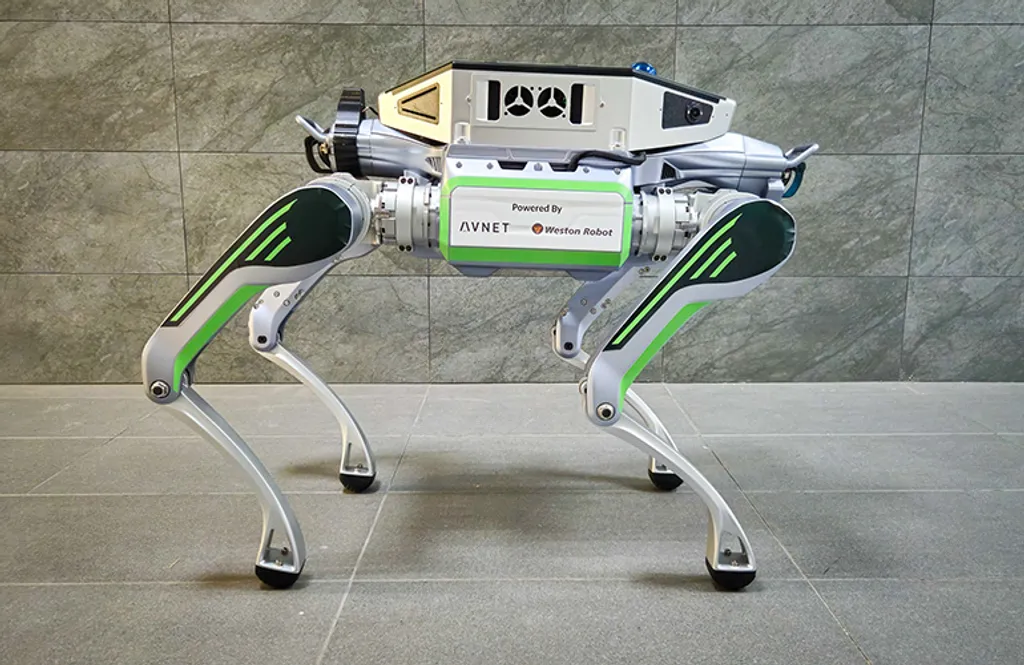
Tech distributor Avnet and Singapore-based robotics integrator Weston Robot have launched a real-time autonomous inspection platform that straps an AI compute “backpack” onto a Unitree quadruped robot, per The Robot Report’s August 5 coverage and a same-day PR Newswire release. The backpack delivers up to 50 TOPS of AI performance for on-robot visual and thermal inspection, 3D lidar mapping, and navigation in GPS-denied spaces — running on “AMD Ryzen AI Embedded processors,” a generic label that lines up closely, but not by name, with the Ryzen AI Embedded X100 family AMD launched three weeks earlier.
Who’s behind it
Weston Robot integrates quadruped, humanoid, and mobile-robot applications for customers across inspection, security, and facility management. It primarily resells Unitree robotic solutions, also builds its own custom AMR platforms and unmanned maritime systems, and sells through a robots-as-a-service model. Avnet is the other half of the pairing: an industrial compute and component distributor that built the “backpack” — the sensor and processing module strapped to the quadruped’s back — rather than the robot itself. Weston Robot supplies the legs and the fleet software; Avnet supplies the brain.
Avnet’s pitch is that new inspection and recognition tasks can be trained and deployed to the robot through its onboard computing architecture, enabling capabilities the company says are “not possible with the basic Unitree quadruped robot” alone. Combined with Weston Robot’s fleet-management software, an operator can set the robot on a mission to patrol a defined path through a facility, using onboard cameras and sensors to stop and investigate flagged inspection sites along the way.
The chip question
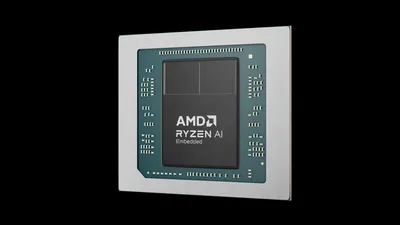
Neither The Robot Report’s writeup nor the PR Newswire release names a specific AMD SKU — both describe the backpack’s processor only as “AMD Ryzen AI Embedded processors” delivering up to 50 TOPS. That’s a meaningful gap, because Industrial Robotics Hub covered AMD’s launch of the Ryzen AI Embedded X100 family on July 27: 8 to 16 Zen 5 CPU cores, up to 40 RDNA 3.5 GPU compute units, and up to 50 TOPS of NPU performance in a 55-watt envelope, sampling since June 2026 — and, as of that story, “no named robot brand such as FANUC, ABB, KUKA, or Yaskawa has announced adoption of the X100 or Kria platform.”
The 50-TOPS figure here matches the X100 family’s top published NPU spec exactly, which is a real signal but not proof by itself — 50 TOPS isn’t a number unique to one chip family. What tips this from coincidence toward likely fact is a second source this desk found independently while reporting the story: Weston Robot’s own newsroom published a separate item on August 2, three days before the formal Avnet partnership announcement, stating plainly that its robot fleet — built “in collaboration with Avnet APAC” and demonstrated at AMD’s Advancing AI 2026 event — runs on “AMD Ryzen™ AI Embedded X100 Series processors.” That page doesn’t use the words “backpack” or “inspection,” so it isn’t an exact one-to-one confirmation the inspection platform in the August 5 announcement is the identical hardware. But it’s Weston Robot’s own on-the-record statement, from the same week and the same named partnership, that X100-series silicon is what’s going into its AMD-powered robots. Treat the connection as well-supported, not officially named in this specific release — and, if it holds, among the first concrete commercial applications of AMD’s newly launched embedded robotics compute.
What the two companies are saying
Arthur Chung, VP of Sales & Supplier Management at Avnet Asia, framed the launch as part of a broader shift: “Physical AI represents the next evolution of artificial intelligence — one where intelligent systems can perceive, reason and act autonomously in the real world… Through our collaboration with Weston Robot, we are bringing together advanced computing, edge AI and robotics to help organizations scale industrial intelligence, strengthen safety and improve operational resilience.”
Dr. Zhang Yanliang, Chief Scientist at Weston Robot, tied the platform to a specific industrial pain point: “Industrial environments generate enormous volumes of operational data, yet many inspection processes remain manual, reactive and resource-intensive… By combining robotics, AI and edge computing, we are enabling a new generation of intelligent systems that continuously monitor critical infrastructure, detect anomalies earlier and deliver actionable insights in real time.”
What isn’t disclosed
This is an announcement of a platform and a partnership, not a disclosed deployment. Neither source names a customer site, a fleet size, a unit count, or a price. Neither names the specific Unitree chassis underneath the backpack — Weston Robot’s own materials describe itself as reselling Unitree hardware broadly, without pinning this platform to one model. That’s a real reporting gap worth stating plainly rather than papering over.
Why this fits a pattern
This lands inside a compute race Industrial Robotics Hub has tracked since AMD’s Advancing AI event: Nvidia’s Jetson and Cosmos stack already has named industrial partners including FANUC, Yaskawa, Kawasaki Heavy Industries, and Fujitsu, while AMD’s push has so far been an open partner network with one software-ecosystem partner and no named hardware adopter. A real, running inspection product on AMD’s embedded silicon — even one where the exact SKU isn’t spelled out in the launch release — would be a first concrete data point in AMD’s favor, three weeks after the chip family’s own announcement had none.
Sources
- Avnet and Weston Robot partner to launch edge AI inspection platform — The Robot Report, Aug 5, 2026
- Avnet and Weston Robot Bring Physical AI to Industrial Operations with Autonomous Inspection Robot — Manila Times (PR Newswire wire pickup), Aug 5, 2026
- Weston Robot x AMD Ryzen X100 Robot Fleet — Advancing AI 2026 — Weston Robot, Aug 2, 2026
Frequently asked questions
What robot is the inspection platform built on? +
A Unitree quadruped robot platform, per Weston Robot's own description of itself as a systems integrator that primarily resells Unitree robotic solutions. Neither The Robot Report's coverage nor the PR Newswire release names a specific Unitree model number, so that detail should be treated as undisclosed rather than assumed.
Is this confirmed to run on AMD's new Ryzen AI Embedded X100 chip? +
Not by name in this announcement. The release says the backpack runs on "AMD Ryzen AI Embedded processors" delivering up to 50 TOPS, without naming a specific SKU. That 50-TOPS figure matches the X100 family's published NPU ceiling exactly, and Weston Robot's own newsroom separately confirmed on August 2, 2026, that it uses "AMD Ryzen AI Embedded X100 Series processors" in its robot fleet built with Avnet APAC. Taken together that is a strong signal, not an on-the-record confirmation of the exact chip in this specific inspection backpack.
Has Avnet or Weston Robot disclosed pricing, unit counts, or a named customer deployment? +
No. This is an announcement of a platform and partnership, not a disclosed commercial deployment. No price, no unit count, no named customer site, and no fleet size appear in either source.
What can the platform actually do? +
Per Avnet, the onboard compute (up to 50 TOPS) supports AI-driven visual and thermal inspection, 3D lidar mapping, and navigation in GPS-denied environments. Combined with Weston Robot's fleet-management software, the robot can be set on a mission to patrol a defined path through a facility and stop to investigate flagged inspection points using its onboard sensors.
More news