This Week: Safety Gets a Chip, Capital Gets Real
NVIDIA's SIL 3 safety hardware appeared in three stories this week, while Unitree's IPO and FORT's SPAC priced robotics capital two different ways.
Five stories this week turn out to be one story told from several angles: robotics is starting to separate what’s certified from what’s merely claimed, and capital markets are pricing that difference unevenly. An NVIDIA safety chip showed up in three unrelated announcements. Two companies went public through structurally different mechanisms, a day apart and roughly a hundredfold apart in headline valuation. And a fifth story, about a components supplier rather than a robot maker, quietly explains why so many are converging on the same hardware instead of building their own.
Thread 1: A named certification, not a slogan
Every humanoid and cobot maker says some version of “safe to work near people.” This week, for the third time in five weeks of coverage, that claim got attached to a specific, checkable piece of silicon instead of a marketing line.
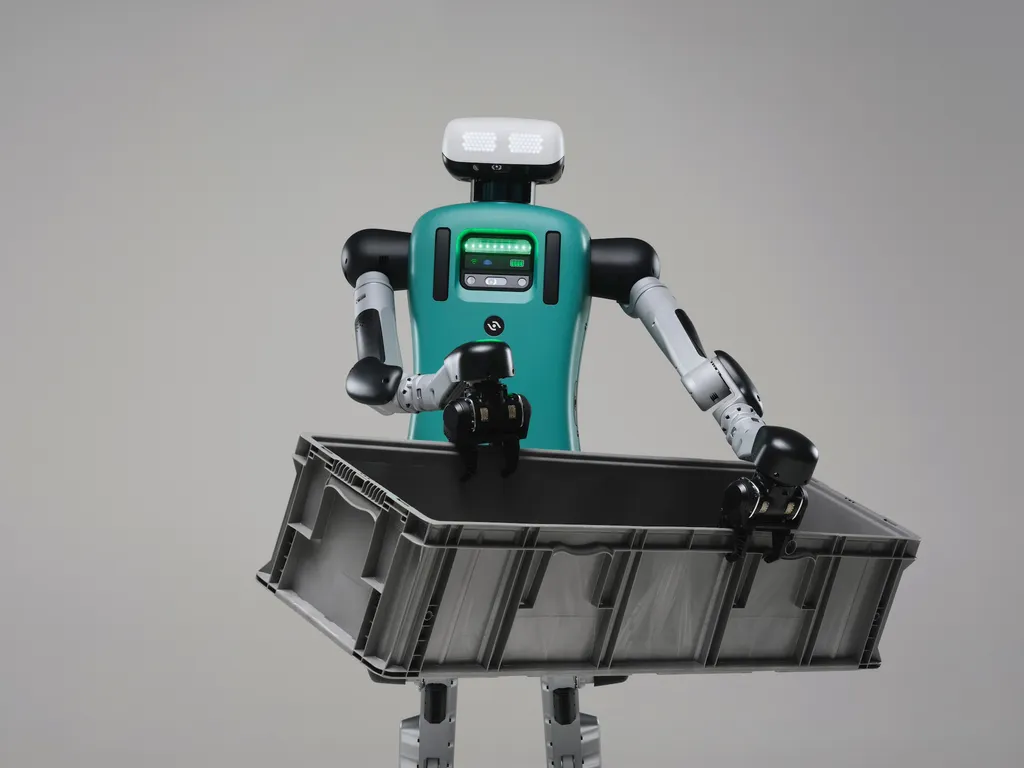
Agility Robotics’ Digit v5 (Aug. 16) is the anchor: NVIDIA’s own newsroom names Agility the first company building a commercial safety system around the IGX Thor module’s Functional Safety Island — an isolated block of silicon, separate power/clocks/I/O from the general AI compute — certified to IEC 61508 SIL 3. That’s independently auditable in a way “cooperatively safe” marketing language is not.
Two days later, LG’s CLOiD factory-pilot announcement (Aug. 18) named the same Halos architecture for a bipedal humanoid targeted for a Q1 2027 unveiling. Worth being precise: none of that story’s sources state LG’s humanoid carries Agility’s specific SIL 3 certification, only that it will use the broader framework — a gap this desk flagged at the time and one that’s still open.
Then, on Aug. 20, FORT Robotics’ SPAC filing disclosed a June 2026 NVIDIA collaboration contributing FORT’s own external “Trust Layer” into Halos — the same program, opposite direction. FORT doesn’t build robots; it sells manufacturer-agnostic safety infrastructure, and its own Wireless E-Stop Pro separately carries SIL 3 certification. FORT’s CTO, Nathan Bivans, sits on the U.S. Technical Advisory Group to ISO TC 200, the committee behind ISO 10218-1:2025. Its customer list includes Agility itself: infrastructure vendor and onboard-compute adopter, tied into the same ecosystem from opposite ends.
One named standard, three appearances in five weeks — the closest thing to an industry consensus metric this space has produced, even though, as LG shows, using the same platform isn’t the same as earning the same certification.
Thread 2: Two ways to price a robotics company
Unitree’s Shanghai STAR Market debut (Aug. 19) and FORT Robotics’ Nasdaq SPAC (Aug. 20) landed a day apart and make an instructive contrast: they aren’t comparable the way a headline suggests.
Unitree priced at 150.80 yuan a share, opened at 1,100 yuan (+629%), then gave back roughly a quarter of that gain, closing at 845 yuan — still up about 460% for the day. Pre-IPO valuation was roughly 61 billion yuan (about $9 billion); at the open, implied market cap reached roughly $62-66 billion at the peak, per two sources. The retail tranche was oversubscribed more than 5,500 times, per two corroborating sources — a separate, higher figure circulating elsewhere could not be confirmed and was declined. Part of the swing is structural, not mysterious: STAR Market listings carry no daily price-move limit for their first five sessions.
FORT, by contrast, is going public through a negotiated SPAC merger: $500.0 million pre-money equity value, $556.6 million pro-forma enterprise value, about $201 million gross proceeds, closing expected Q4 2026. Forbes, independently re-fetched for this recap, used Unitree’s pop to argue that Agility Robotics — the SPAC-bound humanoid maker anchoring Thread 1 — now looks comparatively cheap; this desk’s own coverage separately put Agility’s SPAC value at approximately $2.5 billion. The spread among robotics companies touching public markets within a month: FORT’s $557 million, Agility’s $2.5 billion, Unitree’s $62-66 billion peak — a retail auction and two negotiated SPACs, three different kinds of number, none substitutable.
One Unitree data point deserves its own flag. Days before listing, the company unveiled a humanoid called “Superman” it says can jump two meters from standing and run at up to 12.66 meters per second. This desk’s own Aug. 19 story sourced that to CNBC and labeled it a company claim from a pre-IPO demo, not an independently tested result — used again here with that same label.
Thread 3: The components bet behind the convergence
The quietest story of the week may be the most important structurally. Delta Electronics’ Embodied AI Dual-Arm Robot Platform (Aug. 22), shown at Automation Taipei 2026, pairs an NVIDIA Jetson AGX Orin stack directly with robot motion control so the arm plans and self-corrects from voice commands rather than pre-written code. Alongside it, Delta unveiled an integrated joint module — drive, motor, reducer, encoder and force sensor in one unit — for humanoid and dual-arm robots, and GM Lisa Kao restated the strategy: Delta wants to be “the brain, not the skeleton.”
That’s a fourth distinct position in an ecosystem now showing four roles: Agility integrates safety compute into its own platform; FORT sells external safety infrastructure across other makers’ platforms; AutoStore owns a complete, purpose-built AS/RS platform rather than supplying parts; and Delta declines to build a complete humanoid at all, betting that supplying components is more durable. It also explains some of Thread 1’s NVIDIA convergence: with Jetson-class compute and Isaac ROS tooling available off the shelf, a maker doesn’t have to build its own safety or perception stack from scratch. Delta’s own reported 17% AOI-improvement figure and three-months-to-two-weeks defect-model cut, from its Thailand facility, are real but company-reported, not audited.
Thread 4: The non-binding framework, for contrast
AutoStore’s global supply agreement with Amazon (Aug. 17) sits at the opposite end of the verification spectrum from Thread 1’s certified hardware. AutoStore’s own release states plainly the deal “does not contain any purchasing commitments at this time” — no volumes, no sites, no timeline. It’s a real credibility signal (a formal global framework with the world’s largest fulfillment operator is a marker few AS/RS vendors could claim), but structurally a promise to negotiate, not a transaction, pending an actual purchase order.
Sources
- Agility Robotics to go public through merger with Churchill Capital Corp XI — Agility Robotics, Jun 24, 2026
- NVIDIA Announces Halos for Robotics, the Industry's First Full-Stack Safety System for Physical AI — NVIDIA Newsroom, Jun 23, 2026
- FORT Robotics to Go Public via Business Combination with Newbury Street II Acquisition Corp to Advance the Safety of Physical AI — PR Newswire (FORT Robotics), Aug 18, 2026
- Chinese Robot Maker Unitree Soars 629% in Shanghai Debut — Caixin Global, Aug 19, 2026
- China's backflipping robot maker Unitree pops in Shanghai debut — CNBC, Aug 19, 2026
- Unitree IPO's Massive 629% Pop Makes Agility Robotics Look Super Cheap — Forbes, Aug 19, 2026
- Delta Showcases Embodied AI Dual-Arm Robot Platform and AI-Enhanced Production Line Digital Twin at Automation Taipei 2026 — PR Newswire (Delta Electronics official release), Aug 19, 2026
- AutoStore Holdings Ltd – Strategic supply agreement with Amazon — AutoStore Holdings Ltd (Investor Relations), Aug 13, 2026
Frequently asked questions
What is NVIDIA Halos for Robotics, and why did it appear in three stories this week? +
Halos for Robotics is NVIDIA's full-stack functional-safety system for physical AI, built around an IGX Thor compute module containing a Functional Safety Island certified to IEC 61508 SIL 3 — an internationally recognized industrial safety standard. It showed up in Agility Robotics' Digit v5 (the first confirmed integrator, using the certified hardware directly), LG's planned 2027 humanoid (which will use the broader Halos architecture but has not been confirmed to carry the same SIL 3 certification), and FORT Robotics' SPAC filing (which disclosed a June 2026 collaboration contributing FORT's own external safety layer into the Halos ecosystem). Three unrelated announcements converging on the same named certification, in the same week, is what makes it a thread rather than a coincidence.
Why did Unitree's IPO pop 460% while FORT Robotics' SPAC valued it at roughly $557 million? +
They are different instruments measuring different things. Unitree's STAR Market debut was a retail-driven, largely uncapped first-day trading pop on a Chinese exchange with no daily price-move limit for a new listing's first five sessions — a measure of investor demand and scarcity, not a negotiated valuation. FORT's SPAC merger is a negotiated pre-money equity value ($500.0 million) plus contributed cash, arrived at through deal negotiation between FORT, a blank-check company, and PIPE investors before any public share trades. One is what buyers were willing to bid in real time; the other is what dealmakers agreed a private safety-infrastructure company was worth.
What is Delta Electronics' 'brain, not skeleton' strategy? +
Rather than building complete humanoid or dual-arm robots to compete with makers like Unitree, Delta's Industrial Automation Business Group General Manager Lisa Kao says the company intends to supply the core components — a newly unveiled integrated joint module (drive, motor, reducer, encoder and force sensor in one unit) plus AI compute and control software — that other robot makers build into finished machines. Kao's own framing: Delta wants to be 'the brain, not the skeleton.'
What pattern connects this week's differently-verified claims? +
A four-tier gap between a claim and its proof. Agility's and FORT's SIL 3 certifications are third-party-audited hardware facts. Delta's 17% AOI-improvement figure is a real result the company reports from its own Thailand facility, not an independently audited one. AutoStore's Amazon deal is a signed but explicitly non-binding framework with zero disclosed volume. And Unitree's pre-IPO 'Superman' jump and speed figures are a company demo claim from a single event. All four read as confident facts in a press release; only one tier is independently checkable today.
More news