August 2026: ABB Exits Robotics as NVIDIA's Safety Stack Spreads
ABB posted record orders while exiting robotics; the FCC barred new foreign mobile robots; NVIDIA safety chip reached three integrators at once.
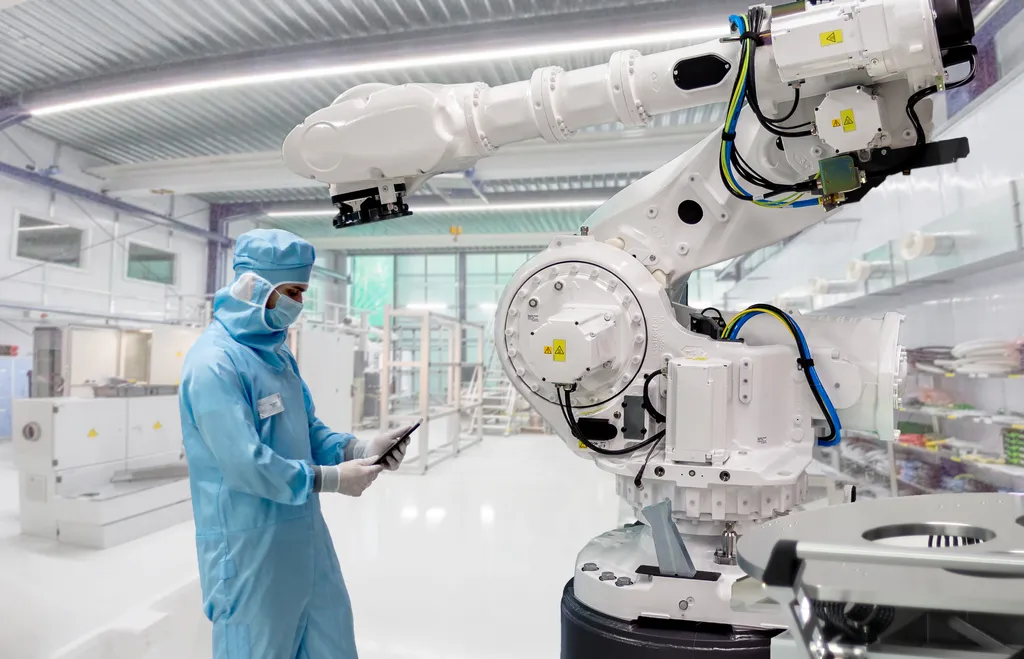
The single fact that defines August 2026: ABB posted the best quarterly order book in its history, then confirmed it is walking away from robotics entirely to help fund an unrelated $5.5 billion acquisition. That gap between performance and direction ran through the month. The FCC took its first-ever action against mobile robots as a national-security category. Three unrelated companies wired the same NVIDIA-certified safety chip into their machines within weeks of each other. Capital markets priced two robotics companies through incompatible mechanisms a day apart. Two manufacturers made the same domestic-production bet for opposite reasons. And A3’s own data showed non-automotive buyers crossing a majority share of North American robot orders for the first time. None of these six threads resolved cleanly by month’s end — the honest state of the industry heading into September.
ABB’s robotics exit, set against a record quarter
ABB reported record Q2 2026 orders of $12.04 billion, up 30% year-over-year (28% comparable), on revenue of $9.475 billion and a 20.2% EBITA margin. Almost none of that strength came from robots. Electrification, ABB’s data-center-driven area, posted $7.231 billion in orders, up 60%; Motion posted $2.592 billion, up 23%; Automation, closest to industrial robotics, was the one segment to shrink, down 13% to $2.454 billion. Robotics is already excluded from ABB’s continuing-operations guidance, tracked as discontinued ahead of a divestment ABB expects to close in H2 2026. ABB plans to redeploy the roughly $4.8 billion in expected proceeds toward its $5.5 billion Rotork acquisition, a UK flow-control maker with no robotics overlap, closing H1 2027. ABB has not named a Robotics buyer or deal structure.
The contrast sharpens against Yaskawa’s Q1 FY2026 results, reported the same week. Yaskawa’s Robotics segment — maker of the Motoman-brand arms, including the HC10 — held revenue roughly flat but saw operating profit collapse 82.3%, to ¥888 million, which Yaskawa attributes to ERP-migration disruption and European restructuring costs. Motion Control, its servo-and-drives business, moved the opposite direction: profit up 50.1% on the same semiconductor- and data-center-linked demand pattern showing up across the industry this month. Two companies, two robotics units, and in both, it’s the AI-infrastructure-adjacent business carrying the earnings — not the robots.
NVIDIA’s safety chip goes live across three integrators
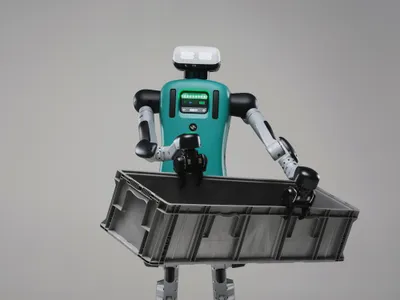
Agility Robotics built its “cooperatively safe” claim for Digit v5 on a checkable piece of hardware: an NVIDIA IGX Thor module containing a Functional Safety Island certified to IEC 61508 SIL 3, isolated from the robot’s main AI compute. Agility reports more than $300 million in contracted, milestone-gated orders ahead of a December 2026 launch — bookings, not recognized revenue. Days later, LG named the same Halos architecture for a still-unnamed bipedal humanoid targeted for a Q1 2027 unveiling, built on Jetson Thor and Isaac GR00T — though neither company has said this humanoid carries Digit v5’s SIL 3 certification, and this desk isn’t assuming parity. LG’s more concrete near-term news is CLOiD, its wheeled home-demo robot, moving to a production-validation pilot on LG’s Tennessee washing-machine line within 2026.
The third leg is FORT Robotics, which sells safety infrastructure to robot makers rather than building robots itself. FORT disclosed its own, separate Halos collaboration the same week it announced a SPAC merger valuing it at $556.6 million pro-forma, headed for Nasdaq as FROB. FORT’s customers include Agility Robotics, Google DeepMind, and Zoox — putting the two on opposite ends of the same NVIDIA safety ecosystem, one selling an external, manufacturer-agnostic layer, the other building certified compute into its own hardware. Three companies, three business models, one certification standard becoming table stakes faster than expected.
FCC’s Covered List reaches mobile robots for the first time
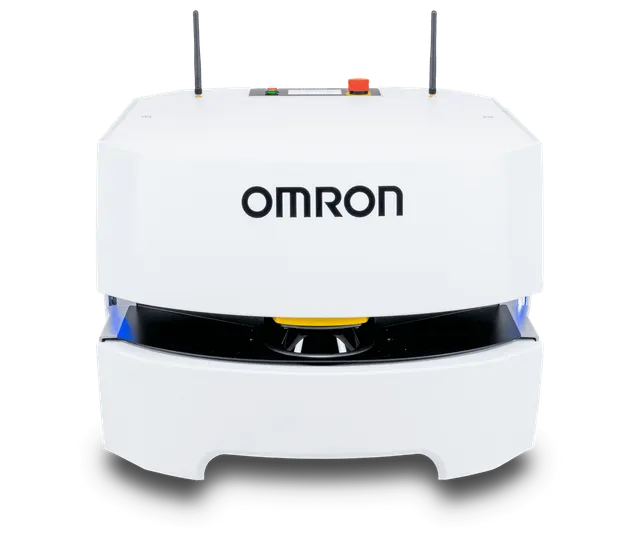
Public Notice DA 26-786, released July 28, added “foreign-produced advanced robotic devices” to the FCC’s Covered List — the mechanism previously used against Huawei, ZTE, and Hikvision gear, now reaching mobile robots for the first time. The rule bars new foreign-built AMRs, quadrupeds, and humanoids from first-time FCC equipment authorization unless the Department of War grants a Conditional Approval. It’s precise in what it doesn’t touch: already-authorized models are unaffected, federal use is unaffected, and fixed arms — six-axis, SCARA, delta, gantry — are explicitly excluded by name. IRH’s own database check found all seven robots tagged “mobile” in our catalog are OMRON models, already-authorized incumbents rather than the new-entrant class this rule targets — a database observation, not evidence any catalog is broadly exempt. The bite lands on the next order for an unauthorized new model, not equipment already on a factory floor.
Two ways to price a robotics company, a day apart
Unitree’s IPO debut on Shanghai’s STAR Market on August 19 priced at 150.80 yuan, opened up 629% at 1,100 yuan, then closed up roughly 460% at 845 yuan — an opening market cap near 445 billion yuan against a 61 billion yuan pre-IPO valuation, and the first mainland China listing for a humanoid maker. A day earlier, FORT Robotics’ SPAC merger was announced at a negotiated $556.6 million pro-forma enterprise value, with roughly $182 million net cash and existing shareholders retaining about 67%. These aren’t comparable numbers — a volatile, no-daily-limit China debut and a negotiated US SPAC valuation are different instruments — and this desk won’t force them onto one axis. Side by side, they show two distinct paths to public capital: retail-driven price discovery versus a fixed, negotiated structure.
Two separate reshoring bets, for different reasons
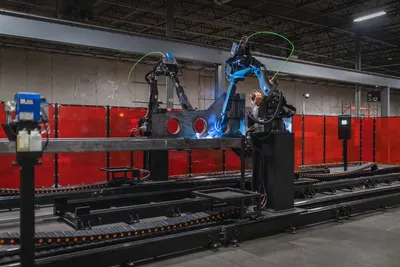
HII, the US Navy’s largest shipbuilder, signed milestone-gated agreements worth up to $900 million with Path Robotics (welding) and GrayMatter Robotics (surface-prep) across seven years — not guaranteed, contingent on both clearing staged readiness gates. Separately, Hyundai’s August 26-27 investor day committed to US robot production starting in 2028 at 30,000 units of annual capacity, alongside a tenfold-plus expansion of its Savannah, Georgia testing center by year-end and a not-yet-sited facility already carrying 25,000 units of guaranteed orders. Two unrelated companies making the same directional bet — domestic robot capacity — for different reasons: HII for supply-chain security amid a welder shortage, Hyundai for commercial scale. Parallel signals, not one trend with two data points.
Non-automotive buyers cross a majority share
A3’s own Q2 2026 data put North American robot orders at 8,940 units (+4.3% year-over-year) worth $622 million (+21.3%), bringing H1 2026 to 17,995 units and $1.166 billion. The sector mix is the real story: Semiconductor & Electronics/Photonics led H1 growth at +35% in units, while Automotive OEM was the only declining sector, down 25%. Non-automotive buyers accounted for 56% of Q2 units — a majority crossing worth naming plainly, since automotive has historically anchored this market. Cobots held a steady 15.4% of H1 units, concentrated in Life Sciences (43.7% of that sector’s orders) and Semiconductor & Electronics (36.5%). The risk inside that good news: the sector offsetting automotive’s decline is itself tied to AI-infrastructure capex, which can turn as fast as it turned up.
What to watch this month
ABB has not named a Robotics buyer, spin-off structure, or IPO plan; its Q3 results (October 20) are the next checkpoint. Agility’s December Digit v5 shipments are the first real test of “cooperatively safe” without fencing, and LG’s Q1 2027 unveiling should clarify whether its humanoid carries Digit v5’s SIL 3 certification. FORT’s SPAC merger and Unitree’s post-IPO trading, now under the STAR Market’s normal ±20% daily limit, both remain open. HII’s agreements haven’t sourced a dollar of work yet — that starts once Path Robotics and GrayMatter clear HII’s gates. And whether September holds the same non-automotive mix will say more about durability than one month can.
Sources
- Q2 2026 results — Record-high orders, strong operational execution and value creation through M&A — ABB, Jul 16, 2026
- ABB Q2 2026 Press Release (Interim Report) — ABB, Jul 16, 2026
- Consolidated Results for the First Quarter of Fiscal Year Ending February 28, 2027 [IFRS] — YASKAWA Electric Corporation, Jul 10, 2026
- FCC's Public Safety and Homeland Security Bureau Announces Addition of Foreign-Produced Power Inverters and Advanced Robotic Devices to FCC Covered List (DA 26-786) — Federal Communications Commission, Jul 28, 2026
- NVIDIA Announces Halos for Robotics, the Industry's First Full-Stack Safety System for Physical AI — NVIDIA Newsroom, Jun 23, 2026
- Robot Orders Increase in Q2 as Automation Demand Broadens Across Industries — Association for Advancing Automation (A3), Aug 11, 2026
- Chinese Robot Maker Unitree Soars 629% in Shanghai Debut — Caixin Global, Aug 19, 2026
- FORT Robotics to Go Public via Business Combination with Newbury Street II Acquisition Corp to Advance the Safety of Physical AI — PR Newswire (FORT Robotics), Aug 18, 2026
- HII Signs Performance-based Production Agreements with Path Robotics and GrayMatter Robotics — HII Newsroom, Aug 6, 2026
- Hyundai Motor Company Charts Profit-Driven Growth Roadmap at 2026 CEO Investor Day — PR Newswire / Hyundai Motor Company, Aug 26, 2026
Robots mentioned
Tap a card to open the full spec sheet.
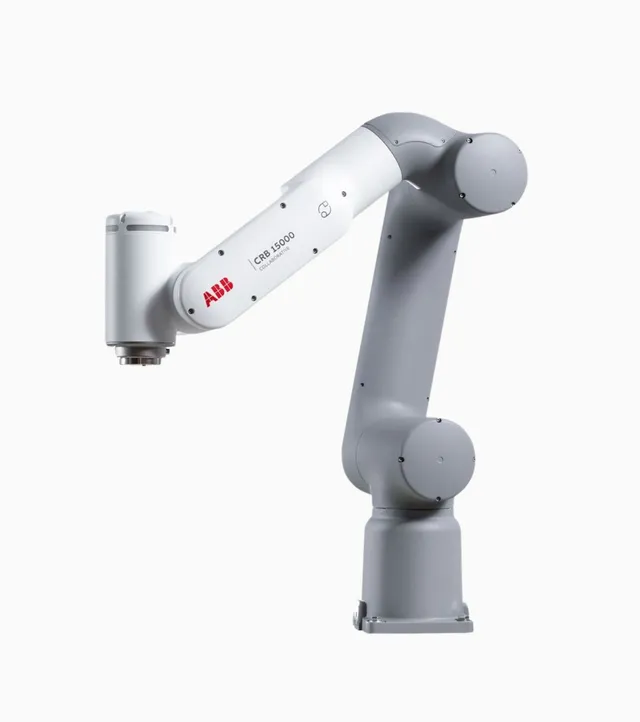
Collaborative
GoFa CRB 15000-12/1.27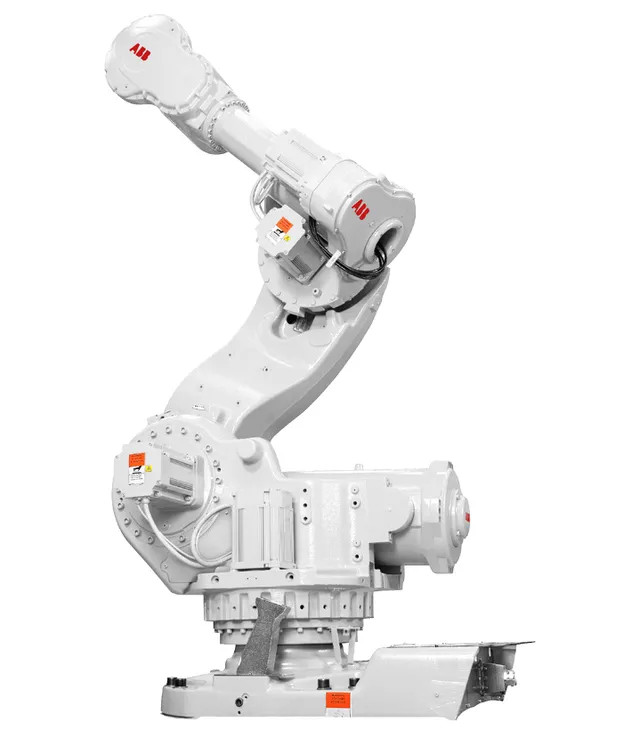
Articulated arm
IRB 7600-500/2.55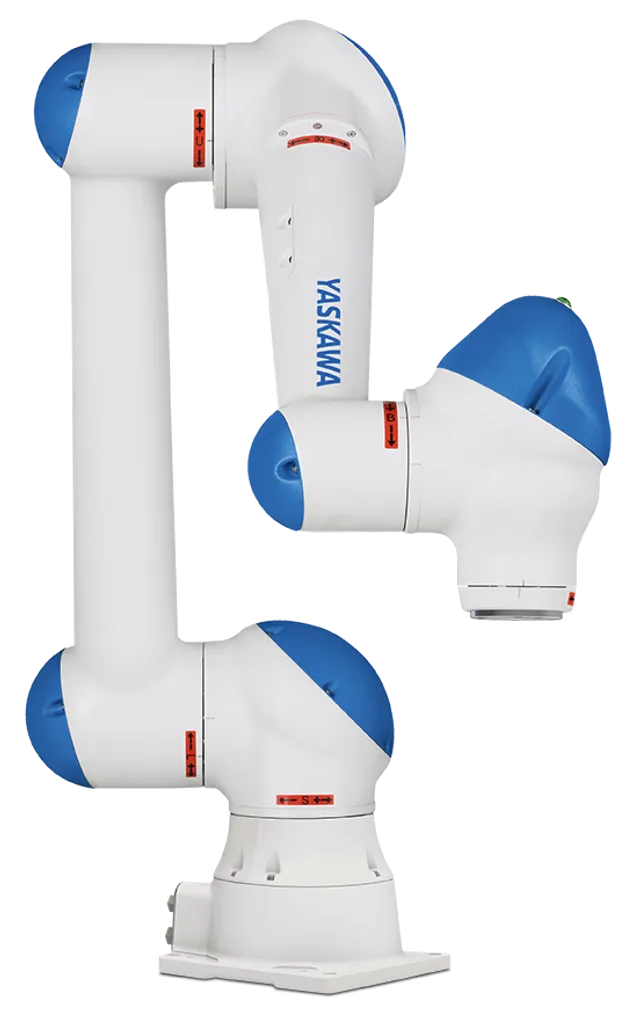
Collaborative
Motoman HC10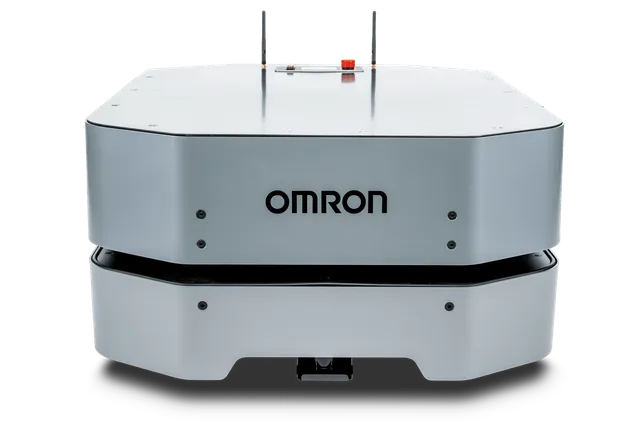
Frequently asked questions
Why is ABB exiting robotics while posting record earnings? +
The two are separate, deliberately sequenced moves. ABB's Q2 2026 record — $12.04 billion in orders, up 30% year-over-year — was driven almost entirely by its Electrification business area's data-center-linked demand, not by Robotics, which is already being reported on a discontinued-operations basis ahead of a divestment ABB expects to close in H2 2026. ABB says it will redeploy the roughly $4.8 billion in expected net proceeds from that divestment toward its $5.5 billion agreed acquisition of Rotork, a flow-control and actuator maker with no robotics overlap. ABB has not named a buyer or disclosed whether the exit is a sale, spin-off, or IPO.
What does the FCC's Covered List ruling actually block, and what does it leave alone? +
Public Notice DA 26-786 (July 28) bars new foreign-built mobile robots, autonomous mobile robots, quadrupeds, and humanoids, from receiving first-time FCC equipment authorization, unless the Department of War grants a Conditional Approval. It is not retroactive: robots already purchased or already authorized are unaffected, federal government use is unaffected, and fixed industrial arms (six-axis, SCARA, delta, gantry) are explicitly excluded by name. It only reaches the next purchase order for a not-yet-authorized mobile robot model.
Why did three unrelated companies adopt NVIDIA's Halos safety chip in the same month? +
They didn't all adopt it in August, but August is when the pattern became visible across three separate deals: Agility Robotics built NVIDIA's IEC 61508 SIL 3-certified Functional Safety Island into Digit v5 as its core 'cooperatively safe' claim; LG named the same Halos for Robotics architecture for a humanoid it will unveil in Q1 2027 (without yet claiming the same SIL 3 certification); and FORT Robotics, which sells safety infrastructure to other robot makers, disclosed its own separate Halos collaboration on the same week it announced a Nasdaq listing. The throughline is that independently certified safety hardware is becoming a checkable claim integrators can audit, not just a marketing line.
Is the non-automotive share of robot orders durable, or just a capex cycle? +
Unresolved, and A3 says as much. Non-automotive buyers reached 56% of Q2 2026 North American robot units, driven by Semiconductor & Electronics/Photonics orders up 35% in H1 while Automotive OEM fell 25%, the only declining sector. That growth is concentrated in an industry, semiconductor and electronics manufacturing, whose own capital spending is itself tied to AI-infrastructure demand. If data-center or AI capex cools, the sector currently offsetting automotive's decline is also the one most exposed to a slowdown.
More news